It is possible to spend an entire lifetime in Toulon and still look towards the mountain to guess what the weather is going to do.
The Faron is simply there.
White when the sun strikes its limestone. Dark green after rain. Sometimes covered in cloud. At other times so sharply defined that installations along the ridge can be made out from the city below.
It is close enough to belong to everyday Toulon and high enough for reaching the summit to feel, briefly, like leaving the city altogether.
At 584 metres, Toulon changes scale.
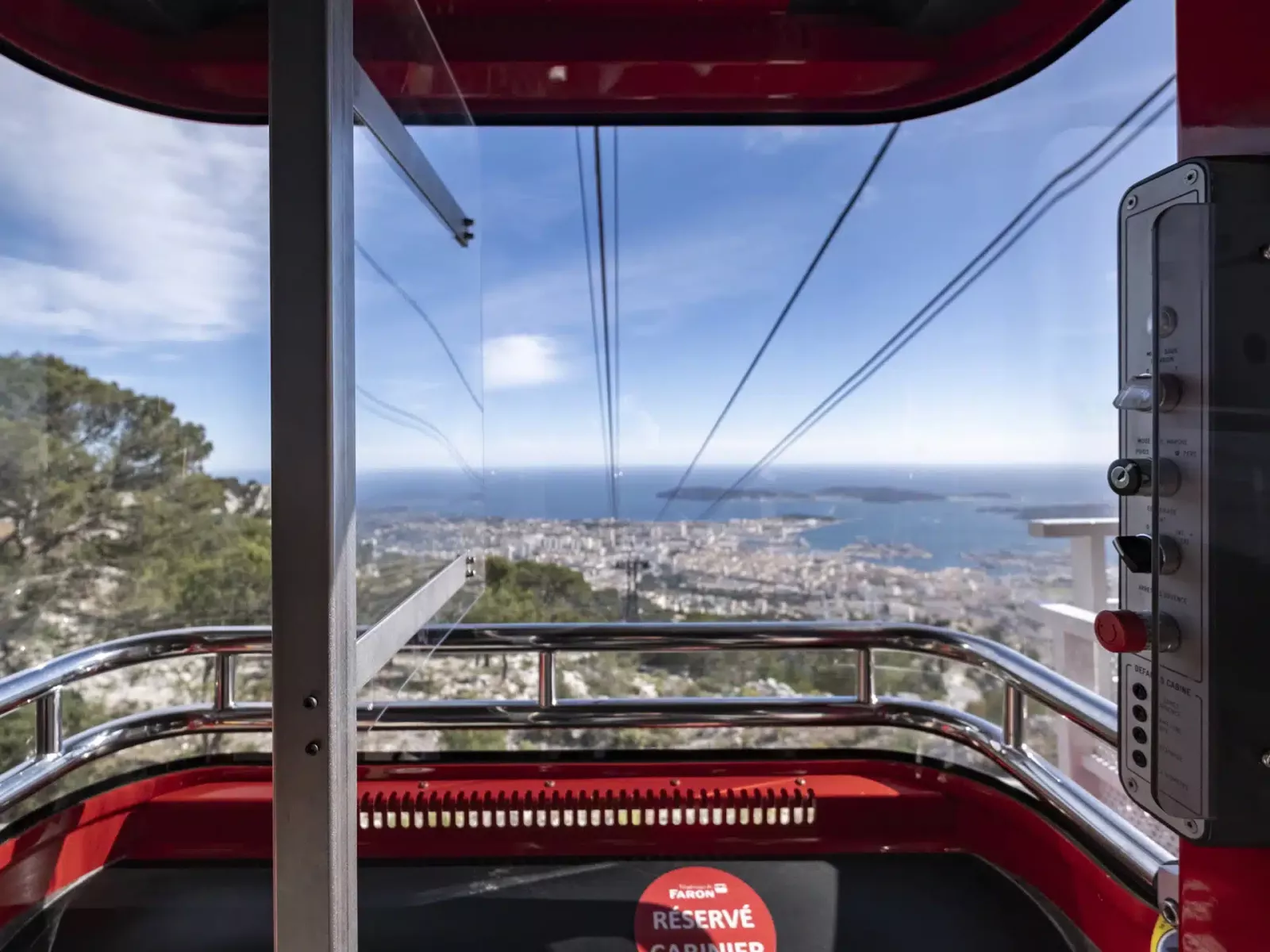
The harbour becomes a map.
Buildings close together.
Ships appear almost motionless on the water.
Saint-Mandrier, the surrounding hills and the Mediterranean spread into a panorama that explains why Mont Faron remains one of Toulon’s most recognisable landmarks.
But loving a mountain does not necessarily mean using it well.
That is precisely the question the city has now decided to ask.
“Mont-Faron 2030: let’s imagine it together”
From 24 June until 28 August 2026, Toulon is conducting what it describes as the first major public consultation devoted specifically to the future of Mont Faron.
Its title is deliberately straightforward: “Le Mont-Faron 2030 : imaginons-le ensemble”.
The consultation was officially launched on 23 June by Toulon mayor Josée Massi, alongside Boris Touaty, president of the Régie de développement des infrastructures du Mont-Faron, and first deputy mayor Julien Orlandini.
The stated objective is to balance three requirements that do not always naturally align: protecting biodiversity, developing tourism responsibly and responding to the expectations of the people who actually use the mountain.
This is therefore rather more ambitious than asking whether three benches should be installed or a sign repainted.
The city is opening a discussion about how the Faron should operate in the coming years.
And everyone can take part.
Not only Toulon residents
One detail matters: the consultation is not restricted to people who live in Toulon.
Visitors and tourists are invited to respond as well.
Their experiences are not identical.
A Toulon resident running there at seven in the morning does not experience the Faron in the same way as a family taking the cable car for the first time.
A cyclist has different priorities from somebody visiting the memorial.
A hiker may not want the same facilities as parents arriving with two young children.
The city estimates that around 220,000 people reach the Faron by road or cable car each year, without counting those who climb on foot or by bicycle.
That represents many different ways of using one mountain.
The questionnaire is designed to reveal them.
Five broad questions behind the consultation
The survey is organised around five main themes.
The first asks, in effect, what relationship people have with the Faron.
The second concerns access.
The third focuses on preserving nature and protecting the mountain from wildfire.
The fourth examines visitor facilities and services at the summit.
The fifth addresses activities and heritage.
Each section also includes an open question allowing participants to suggest ideas of their own.
That may prove to be the most interesting part.
Asking whether people prefer A, B or C measures opinion.
Asking what is missing means accepting that somebody might answer D.
The city has nevertheless made one limitation clear: Mont Faron is a protected and classified site. Not everything can be built or organised simply because an idea proves popular in the questionnaire.
Which is probably for the best.
The Faron is not a retail park with an attractive view.
How should people reach the Faron?
Access alone is substantial enough to justify consultation.
The summit can be reached by road.
On foot.
By bicycle, for those whose legs have agreed to the arrangement.
And, most famously, by cable car.
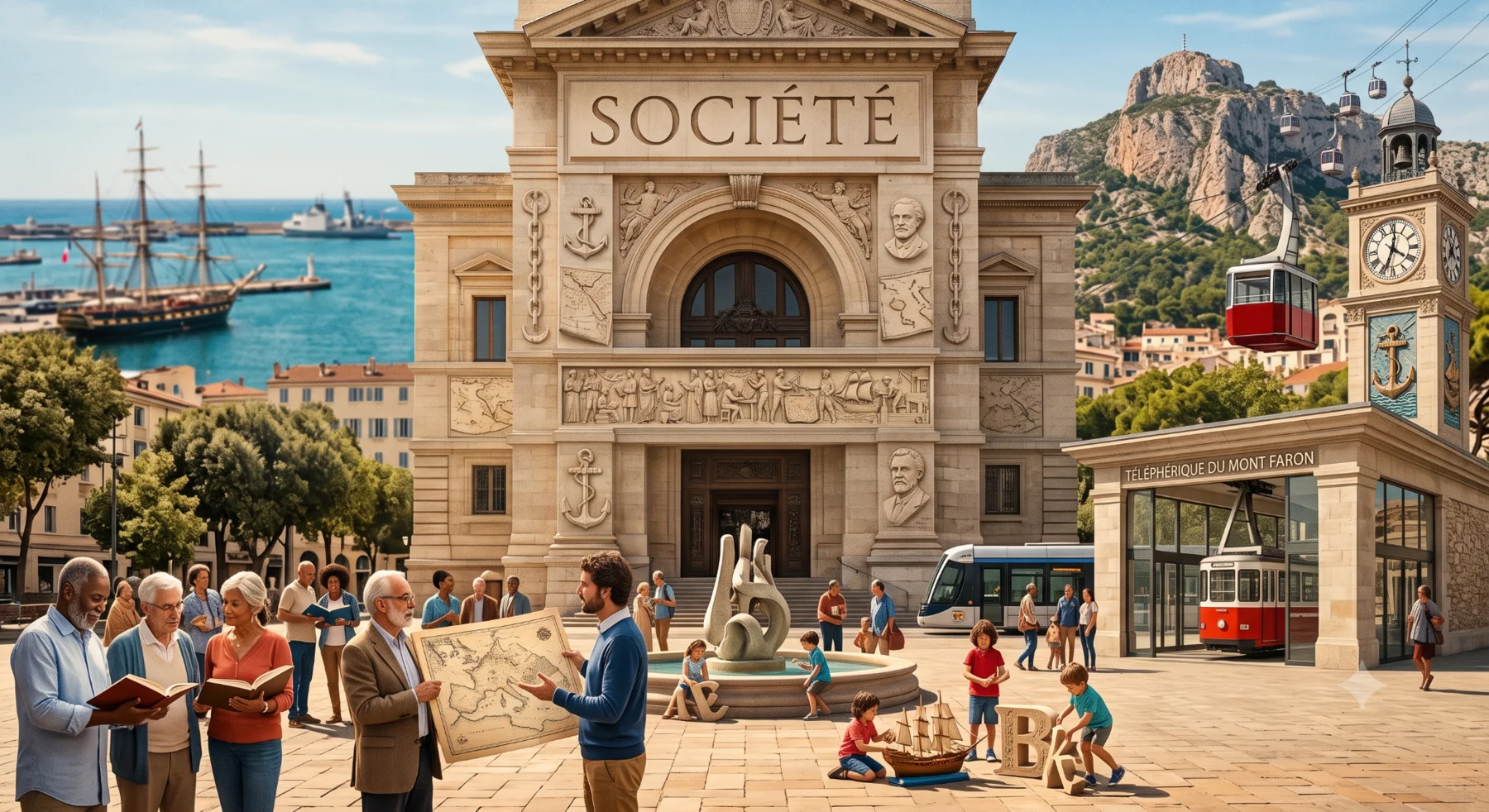
Its red cabins are now almost as closely associated with Toulon as the mountain itself.
Inaugurated in July 1959, the cable car originated through an initiative by Louis Valéry Roussel, who wanted to improve access to homes on the summit. Today it carries residents and visitors from the city to Mont Faron in just a few minutes, with redesigned cabins introduced in 2017.
The journey takes approximately six minutes.
Six minutes in which Toulon quite literally falls away beneath your feet.
For tourists, it is an attraction.
For the city, it is also transport infrastructure that must form part of any discussion about future visitor numbers.
Making the Faron more attractive without considering how hundreds of thousands of people reach it would only solve half the problem.
A mountain — and a fragile natural environment
This is probably the central issue.
The Faron is not a large empty piece of land waiting to be filled with activities.
The massif is classified, forms part of Natura 2000 and is recognised as an important natural area. Local planning documents also identify specific protections and natural hazards, including rockfalls and ground movement.
The limestone that gives the mountain its spectacular appearance is also a constraint.
The mountain moves.
Rocks fall.
Cliffs require monitoring.
For more than a decade, Toulon and the metropolitan authority have studied these risks. Nineteen priority projects have been identified within a programme extending to 2032, including anchors and protective netting designed to secure roads and users.
Then there is fire.
Every summer, wildfire risk can lead to access restrictions and even suspension of the cable car.
That helps explain why “developing the Faron” is considerably more complicated than adding attractions to a map.
Every additional car.
Every new facility.
Every event.
Every building.
Every path.
All of them must coexist with a fragile Mediterranean environment under considerable pressure.
March’s violent winds were a reminder that nature has the final say
The year 2026 provided a fairly dramatic example.
At the end of March, gusts reaching 140 km/h struck the summit and weakened several dozen pine trees, many of them old.
Metropolitan teams had to intervene quickly to secure public paths and deal with trees posing a danger. Some trunks and branches were reused directly on the site, including for the organisation of parking areas.
That event may appear unrelated to a tourism questionnaire.
In reality, it lies at the heart of the issue.
Imagining the Faron in 2030 means imagining a mountain exposed to stronger climatic events, drought, wildfire and substantial visitor pressure.
The project therefore cannot simply ask:
“What would you like to do up there?”
It must also ask:
“What can the mountain support?”
The Faron is more than its view
Reducing the massif to a giant natural balcony would also miss much of its significance.
It contains several layers of Toulon’s history.
Nine fortified structures were built across the mountain, reflecting its military importance in protecting the harbour: Fort Saint-Antoine, Tour de l’Ubac, Tour Beaumont, Fort de la Croix-Faron, Fort Faron and other elements of a defensive system developed over centuries.
The Faron is also a national site of remembrance.
The Mémorial du Débarquement et de la Libération en Provence commemorates the landings of 15 August 1944 and the battles that led to the liberation of Toulon and Marseille. Located in Tour Beaumont, the memorial was inaugurated by General de Gaulle on 15 August 1964 and extensively renovated in 2017.
People therefore reach the Faron for very different reasons.
To walk.
To look over the city.
To cycle.
To visit the memorial.
To ride the cable car with children.
To eat.
To photograph the sunset.
To follow a trail.
To remember.
That mixture is exactly what makes any reorganisation difficult.
What should be waiting at the summit tomorrow?
The consultation is not beginning entirely from a blank page.
Several possibilities were already mentioned by the municipality when it launched the process.
One is “Le Son by Faron”, potentially taking Toulon’s cultural “Le Son by Toulon” concept to the summit.
A night devoted to stargazing has also been suggested.
Food and restaurant provision could be reconsidered.
The city has also raised the possibility of changing the zoo “into another format” and increasing the number of school groups welcomed on the mountain.
Precision matters here: these are not final approved projects.
They are possibilities.
The questionnaire is intended to help identify priorities before a further stage of consultation involving associations, people working on the site and experts. Results are expected in early autumn, with the first measures potentially appearing in spring 2027.
The zoo: a question that cannot be avoided
Of all the ideas mentioned, the zoo’s future is likely to receive particular attention.
It has long been part of the summit landscape.
Public attitudes towards animal parks have changed considerably.
And the mayor’s wording remains deliberately open: the city wants to consider its future and allow it to “evolve into another format”.
At this stage, claiming that it will close, describing a precise transformation or announcing its replacement would go beyond what the city has actually stated.
That is precisely where public consultation becomes interesting.
What should a facility involving animals look like in 2030 on a protected natural mountain?
A park?
An educational site?
A facility more closely focused on local species and Mediterranean biodiversity?
Something else entirely?
There is no official answer yet.
Which is why this is the moment to suggest one.
Do more — or do better?
The most interesting question may ultimately not be how many new activities can be added to the Faron.
It may be what such a place should become when a city wants to make it more active.
There is a modern temptation to treat every successful place in the same way:
add something.
An attraction.
A restaurant.
An event.
An activity.
Then another.
Yet part of the Faron’s luxury may lie in the spaces that have not been filled.
The silence of a trail.
An opening between two pine trees.
A piece of limestone with the harbour below.
A place where nobody has installed a screen.
Modernisation can therefore mean better parking organisation, clearer paths, renovated facilities, improved reception, better access for families or people who currently struggle to reach parts of the site, and better interpretation of the natural environment.
Without necessarily constructing more.
The question sounds easy.
It is not.
How can Toulon improve the Faron without creating a Faron that has lost the reason people climbed it in the first place?
A summit belonging to residents as much as tourists
Few places are as strongly connected with Toulon’s visual identity.
Remove the city’s name from a photograph taken at the summit and the harbour can still be recognised.
Show a red cabin suspended above the city and many people immediately know where it is.
Familiarity has a disadvantage.
When the Faron is always visible, Toulon residents can forget what they have.
Someone elsewhere in France might travel several hours to find a viewpoint like this only minutes from a city centre.
In Toulon, it is entirely possible to go years without climbing it.
The consultation may therefore have another useful effect:
forcing the city to look at its own mountain again.
Not merely as a postcard.
As a living place.
A place that ages.
A place altered by climate.
A place altered by the people using it.
And a place that has to be handed on.
How to take part
The public consultation remains open until Friday 28 August 2026.
The questionnaire can be completed online through the City of Toulon website.
Paper copies are also available at several physical locations, including the cable car, the Mémorial du Débarquement et de la Libération en Provence, City Hall, district town halls and local interest committees.
There are therefore still a few days left to participate.
And this time, the question is not merely what colour three flower boxes should be.
Access, environment, fire prevention, activities, heritage, services, restaurants and the future of existing facilities all concern what one of Toulon’s defining places may look like over the next decade.
The hard part begins after the questionnaire
A public consultation remains just that: a consultation.
It cannot guarantee that every suggestion will be adopted.
Nor does a popular answer automatically override planning restrictions.
The Faron is subject to environmental protections, regulations and natural hazards that will make some ideas impossible regardless of how many votes they receive.
The real test therefore comes afterwards.
Residents will have spoken.
The city will need to publish what it learned.
Explain what is retained.
Explain what is not.
And, above all, demonstrate how the responses affect the final project.
Results are expected in early autumn, followed by consultation with the people and organisations directly involved with the mountain, while the first measures are expected from spring 2027.
That is when “let’s imagine it together” will have to become more than a slogan.
The Faron does not need anyone to teach it how to be beautiful
There is one question no survey seems necessary to answer.
The Faron does not need a new identity.
It already has one.
Its limestone cliffs.
Its pine trees.
Its forts.
Its memorial.
Its paths.
Its improbable road clinging to the mountain.
Its two red cable cars crossing above Toulon.
And, above all, that view.
The view that still makes somebody who has seen it a hundred times stop for a few seconds.
The challenge of “Mont-Faron 2030” is therefore less about inventing a new mountain than understanding how Toulon can live better with the one it already has.
Improve it without saturating it.
Open it without damaging it.
Make it more welcoming without turning it into an amusement park.
Protect nature without making the mountain inaccessible.
Bring its heritage to life without freezing it in time.
And allow a child who reaches the summit in 2040 to experience something Toulon residents already know very well:
being only a few minutes from home,
yet somehow feeling as though they have arrived above the world.