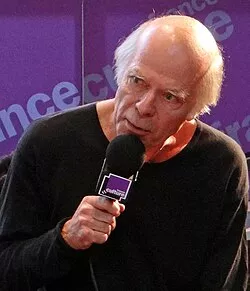

Jean Aicard, the Great Bard of Provence
Biography
Jean Aicard was born in Toulon on February 4, 1848. A poet, novelist, and playwright, he was deeply marked by his Southern childhood and became one of the great literary representatives of Provence in the late 19th century. As a teenager, he associated with Alphonse de Lamartine, whose influence can be seen in his lyricism, humanism, and taste for accessible poetry. He became president of the Société des gens de lettres in 1894 and was elected to the Académie française in 1909. He died in 1921.
Major Works
His body of work is abundant and spans poetry, theater, and the novel. Among his main titles are Poèmes de Provence, La Chanson de l’enfant, Miette et Noré, Le Père Lebonnard, Roi de Camargue, Notre-Dame d’amour, Maurin des Maures, and Gaspard de Besse. Maurin des Maures, published in 1908, remains his most famous work. The novel features a free, cunning, and popular poacher who became an almost legendary figure of the Var hinterland.
Literary Movement and Thought
Jean Aicard stands at the intersection of late Romanticism, Provençal regionalism, and popular fiction. He admired the Félibrige movement and shared with Frédéric Mistral the desire to celebrate Provence, even though he chose to write primarily in French rather than Provençal. His work defends a generous vision of humanity, built on compassion, fraternity, an attachment to childhood, and love for one’s native land.
His Provence is not merely a picturesque backdrop. It becomes a moral territory in which freedom, dignity, and proximity to nature often oppose the rigidities of society. Maurin thus embodies a form of instinctive, popular justice. An outlaw in the eyes of institutions, he nevertheless appears more loyal and human than many officially respectable characters.
Jean Aicard occupies a central place in Toulon's literary heritage. He remains the author who contributed most strongly to inscribing the Var, the Maures, and eastern Provence into national literature.
Léon Vérane, the Poet of Toulon and Whimsy
Biography
Léon Vérane was born in Toulon in 1886 and died in Solliès-Pont in 1954. A poet, critic, and coordinator of local literary life, he founded the journal Facettes in 1910, which ran until 1946. This publication played an essential role in disseminating poetry and creating a network of writers around Toulon. Vérane received several literary honors and was named a Knight of the Legion of Honor in 1951.
Major Works
Among his most important collections and works are Dans le jardin des lys et des verveines rouges, Images au jardin, Le Promenoir des amis, Terre de songe, Les Étoiles noires, Imagerie toulonnaise, La Calanque au soleil, Toulon, and Le Luthier des équipages. He devoted a significant portion of his work to his native city, its streets, its popular figures, and its maritime atmosphere.
Literary Movement and Thought
Léon Vérane is generally associated with the école fantaisiste (fantaisiste school), an early 20th-century poetic movement that also included Francis Carco, Tristan Derème, and Paul-Jean Toulet. Whimsical poetry favors apparent lightness, musicality, irony, subtle melancholy, and attention to the details of everyday life.
In Vérane's work, whimsy is not a lack of depth. It allows one to look at the fragility of the world without adopting the solemn tone of official poetry. His texts place great emphasis on memories, gardens, harbors, lost friendships, and modest pleasures.
His work also constitutes a poetic memory of Toulon. Unlike Aicard, who prioritized rural landscapes and grand Provençal figures, Vérane was more interested in the city itself, its neighborhoods, its roadstead, its sailors, and its working-class identity.
Jean-Michel Thibaux, Novelist of History and Secrets
Biography
Born in Toulon, Jean-Michel Thibaux began his career as an explosive ordnance disposal technician in the French Navy. His missions, particularly in conflict-ridden regions, fueled his interest in history, civilizations, and political or religious confrontations. He later left the military to devote himself to writing, publishing numerous historical, Provençal, biographical, and espionage novels.
Major Works
His first novel, Les Âmes brûlantes, takes place during the First Crusade. Le Secret de l’abbé Saunière subsequently brought him broader recognition. His work includes numerous novels dedicated to historical enigmas, religious destinies, secret societies, and lesser-known episodes of Mediterranean history.
Literary Movement and Thought
Jean-Michel Thibaux belongs primarily to the popular historical novel movement. He relies on real facts, traditions, and historical figures, using suspense and adventure narrative techniques to make history accessible.
His literary philosophy rests on the idea that the past remains alive beneath the surface of the present. Beliefs, ancient conflicts, and political or religious secrets continue to influence modern societies. His work is also characterized by a strong interest in the Mediterranean, envisioned as a space of movement, war, faith, and encounters between civilizations.
Christian Astolfi, Working-Class Memory of the Arsenal
Biography
Christian Astolfi was born in Toulon in 1958. Coming from a working-class family, he worked for several years at the Toulon naval arsenal as a sheet metal carpenter before becoming an ergonomist and then a head educational advisor. He also founded the Lycée des Possibles, an institution for youth at risk of dropping out of school. He began writing in the 1990s and published his first novel, Les Tambours de pierre, in 2007.
Major Works
His main novels include Les Tambours de pierre, Une peine capitale, Cette fois je ne t’attendrai pas, De notre monde emporté, and L’Œil de la perdrix. De notre monde emporté, published in 2022, notably received the Prix France Bleu–Pages des libraires and the Prix Jean Amila-Meckert. L’Œil de la perdrix, published in 2024, was featured in several literary selections.
Literary Movement and Thought
Christian Astolfi fits into social and working-class literature. His writing focuses on laborers, worn-out bodies, manual trades, collective solidarity, and lives that official narratives often forget.
In De notre monde emporté, the arsenal is not merely a workplace. It becomes a human universe filled with camaraderie, professional pride, physical suffering, and the consequences of asbestos exposure. Astolfi gives voice to those who built ships without always receiving the recognition or protection to which they were entitled.
His work can be linked to social realism and the proletarian novel, even as his writing retains a sensitive and poetic dimension. It serves as a reminder that Toulon cannot be understood solely through its Navy or landscapes: its identity is also that of the thousands of workers who labored in the arsenal and harbor-related industries.
Nadine Agostini, Poetry as Experience and Performance
Biography
Nadine Agostini was born in Toulon in 1960. A poet, author, and performance artist, she participates in numerous public readings and has developed a body of work in which text is closely tied to voice, rhythm, and physical presence. She belongs to a generation of authors who no longer limit poetry to the printed page.
Works and Approach
Her texts often take the form of fragments, notations, linguistic diversions, and wordplay on everyday speech. She is interested in language glitches, repetition, idioms, and how words construct social norms.
Literary Movement and Thought
Nadine Agostini falls under contemporary experimental poetry and performance poetry. Her work does not necessarily seek to tell a story or convey a single message. Instead, it sets language in motion and forces the reader or listener to observe the hidden mechanics of speech.
This approach strays significantly from traditional regionalist poetry. In her work, Toulon is not systematically depicted as a Provençal landscape. Toulon’s identity is expressed through a free, oral, and sometimes irreverent relationship with language.
Antoine Simon, the Fairground Poet
Biography
Antoine Simon was born in Toulon on October 5, 1943. He published his first texts as a teenager in various journals. After brief literary studies, he became a fairground vendor and chose to combine his two activities under the term "non-sedentary poet" or "fairground poet." He went on to participate in numerous poetry festivals and events in France and abroad.
Works and Approach
Between 1994 and 1997, he published Ticket à conserver, a series of monthly collections composed from texts written on tickets and paper receipts from daily life. This practice transformed insignificant mediums into poetic objects.
Literary Movement and Thought
Antoine Simon belongs to a poetry of everyday life, orality, and performance. His approach challenges the traditional image of the writer secluded from the world. The poet becomes a person on the move, present in markets, streets, cafés, and festivals.
His work defends a democratic conception of poetry. It is not reserved for institutions, major publishing houses, or academic circles. It can be born on a receipt, transmitted orally, and emerge in ordinary places.
Véronique Vassiliou, Writing Language and Failure
Biography
Véronique Vassiliou was born in Toulon in 1962. She defended a doctoral thesis on verse and published her first book, Geste 8 et 5, in 1990. She contributed to several journals and joined the editorial board of Action Poétique.
Major Works
Her publications notably include Le Coefficient d’échec. Her work combines poetry, critical reflection, fragmentary autobiography, and formal experimentation.
Literary Movement and Thought
Her work can be linked to contemporary writing styles that question text construction. She is less interested in classic storytelling than in ruptures, structures, lists, gestures, and the material possibilities of language.
The concept of failure plays a major role in her approach. It does not simply designate personal defeat, but rather a way to resist models of success, coherence, and efficiency imposed by society. The text can hesitate, branch off, and contradict itself without losing its value.
Gérald Moutet, the Traveler Rooted in His Origins
Biography
Gérald Moutet was born in Toulon in 1952 into a family connected to the Navy. His childhood was marked by travel, particularly to Morocco and Madagascar. He worked as a journalist for a time before devoting himself to other forms of writing. His travels in the Caribbean and the Pacific later fed into his narratives.
Works and Universe
His publications fall under travel writing, novels, historical fiction, and occasionally youth literature. His work draws upon encounters, foreign cultures, traveled landscapes, and the stories of ordinary people.
Literary Movement and Thought
Gérald Moutet belongs to a literature of travel and transmission. However, departing does not lead to a break with one's origins. On the contrary, travel becomes a means to better understand one's own roots.
This tension between attachment to home and the call of the distant aligns remarkably well with Toulon. As a port city, the municipality is simultaneously an anchor and a point of departure. Ships connect the roadstead to the rest of the world, while travelers hold fast to the memory of the land left behind.
Olivier Maurel, Writer of Non-Violent Education
Biography
Olivier Maurel was born in Toulon in 1937. A teacher and essayist, he has dedicated several books to violence, education, parenting, and the mechanisms through which violent behaviors are reproduced. He is the author of several books focusing on corporal punishment in child-rearing and non-violence.
Major Works and Themes
His work primarily analyzes physical punishment, educational humiliation, and the social consequences of violence against children. He examines how a society can condemn certain acts of violence while continuing to view other practices as normal when framed as discipline.
School of Thought
Olivier Maurel belongs to the realm of humanist and activist essay writing rather than fictional literature. His thought is rooted in non-violence, respect for children, and challenging authoritarian educational traditions.
His work illustrates another dimension of Toulon literature: intellectual commitment. The author does not settle for describing the world; he seeks to modify behavior and spark moral and social debate.
Henri Espieux, the Occitan Language, and Provençal Heritage
Biography
Henri Espieux was born in Toulon in 1923 and died in 1971. A poet and writer in both French and Occitan, he participated in the 20th-century renewal of Occitan literature (littérature d’oc). The National Library of France lists him as an author writing in French, Occitan, and Provençal.
Literary Movement and Thought
Henri Espieux aligns with the modern Occitanist movement. Unlike a regionalism limited to picturesque descriptions of landscapes, Occitanism regards the language as a living element of culture, creation, and at times, resistance.
His work serves as a reminder that Toulon is situated in a historically Provençal and Occitan territory. The langue d’oc long coexisted with French, even as its use gradually declined. Writing in Occitan meant preserving a memory, but also asserting that this language remains capable of expressing the contemporary world.
A Literature Shaped by the Sea
The sea holds a special place in the imagination of Toulon writers. It represents horizon, departure, danger, and openness to other cultures all at once. For historical novelists, it connects Mediterranean civilizations. For poets, it becomes a sensory presence made of light, wind, coves (calanques), harbors, and ships.
However, Toulon's maritime literature should not be reduced to a tourist vision. The roadstead is also a military and industrial space. It involves discipline, war, shipbuilding, and industrial labor. The presence of the arsenal thus endows Toulon with a literary identity distinct from that of other Provençal cities.
A Popular and Social Literature
Several Toulon writers give a central place to the working classes. Jean Aicard turns a poacher into a literary hero. Christian Astolfi recounts the lives of arsenal workers. Antoine Simon brings poetry to markets and ordinary spaces. Léon Vérane observes sailors, streets, and the city's humble figures.
This attention to everyday people is one of the guiding threads of Toulon literature. The main characters are not necessarily the powerful, naval officers, or representatives of institutions. They are often those living on the margins, working with their hands, moving between city and countryside, or passing on endangered memories.
Toulon: Between Provence and Modernity
Toulon literature is traversed by a tension between Provençal heritage and a desire for modernity. Jean Aicard celebrates the landscapes, traditions, and popular figures of the Var. Henri Espieux defends the Occitan language. Conversely, Nadine Agostini and Véronique Vassiliou experiment with new forms that no longer fit classical regionalism.
These two directions are not necessarily opposed. Both seek to escape a uniform vision of French literature. Regionalism asserts the value of a territory long considered peripheral. Contemporary experimentation challenges dominant linguistic forms. In both cases, the Toulon author writes from the margins and transforms that position into a creative strength.
Major Movements in Toulon Literature
Provençal Regionalism: Primarily represented by Jean Aicard. It values the landscapes, traditions, legends, and popular figures of Provence. However, it should not be confused with simple folklore. In Aicard's work, the territory becomes the foundation for reflections on freedom, justice, and dignity.
Whimsical Poetry (Poésie Fantaisiste): Brought to Toulon by Léon Vérane, it combines musicality, simplicity, irony, and melancholy. It favors subtle emotions and ordinary scenes over grand lyrical declarations.
Working-Class and Social Literature: Christian Astolfi is currently one of its most prominent figures. It portrays labor, illness, solidarity, and the marginalization of working-class communities.
Experimental Poetry: Nadine Agostini, Antoine Simon, and Véronique Vassiliou each explore, in their own way, orality, performance, fragments, everyday materials, and the mechanics of language.
Popular Historical Fiction: Jean-Michel Thibaux uses suspense and adventure to explore history, religions, conflicts, and secrets of the past.
Humanist and Activist Essays: Olivier Maurel represents a literature of ideas directed toward non-violence, education, and the transformation of social practices.
Occitan Writing: Henri Espieux places Toulon within the continuity of Occitan culture and the 20th-century movement to renew Occitan literature.
Essential Toulon Authors to Read
To discover Provençal heritage, begin with Maurin des Maures by Jean Aicard. The novel offers a vivid portrait of the Var region and features one of the most iconic characters in regional literature.
To understand Toulon’s working-class memory, De notre monde emporté by Christian Astolfi is essential reading. The book immerses the reader in the world of the naval arsenal and measures the human cost of industrial history.
To explore early 20th-century Toulon poetry, Léon Vérane’s collections and his works dedicated to Toulon serve as an ideal entry point.
For more experimental contemporary literature, the texts of Nadine Agostini, Antoine Simon, and Véronique Vassiliou demonstrate that Toulon's literary output is limited neither to regionalist novels nor to Provençal nostalgia.
Finally, readers drawn to history, mysteries, and popular storytelling can turn to the novels of Jean-Michel Thibaux.
Final Thoughts
Toulon is not merely a city represented by a few isolated writers. It possesses a true literary landscape, shaped by generations of authors with vastly different styles and concerns.
Jean Aicard gave the Var its great fictional figures. Léon Vérane transformed Toulon into poetic material. Jean-Michel Thibaux explored the secrets of history. Christian Astolfi gave voice to the workers of the arsenal. Nadine Agostini, Antoine Simon, and Véronique Vassiliou renewed poetic form. Olivier Maurel committed writing to the fight for non-violence. Henri Espieux championed the vitality of the Occitan language.
Through them emerges a complex city: Provençal without being frozen in folklore, maritime without being limited to travel tales, military yet deeply working-class, attached to its traditions while continuously generating modern and experimental writing.
Ultimately, Toulon's literature resembles its roadstead. It welcomes voices from many horizons, holds the memory of departures and conflicts, and opens its gaze toward a wider world. To read Toulon’s authors is to discover another story of the city—one written by its poets, workers, travelers, thinkers, and storytellers.